Architectural photocatalytic coating - List of Manufacturers, Suppliers, Companies and Products | IPROS

Architectural photocatalytic coating Product List

1~2 item / All 2 items

Displayed results

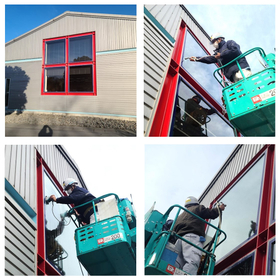
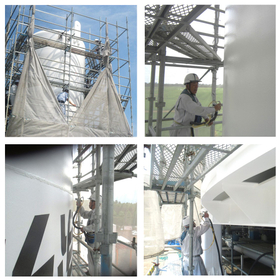
This is an example of photocatalytic treatment for anti-fouling measures on large tanks.

The decomposition of organic dirt using photocatalysts and self-cleaning creates a clean environment by breaking down substances that cause dirt, odors, bacteria, and mold both inside and outside buildings.

By coating the titanium dioxide aqueous solution, which is the raw material for photocatalysts, on the ceilings and walls of buildings, it exhibits effects such as anti-soiling, deodorization, antibacterial properties, antiviral properties, and mold prevention. When light hits the surface of the indoor photocatalyst application, reactive oxygen species are generated on the surface, decomposing organic substances that cause dirt and odors into harmless water and carbon dioxide. Additionally, the surface of the outdoor photocatalyst application has a hydrophilic effect, where rainwater spreads thinly under the dirt, contributing to self-cleaning as it washes away the surface dirt, thus maintaining the aesthetic of the building and reducing cleaning costs. Since the raw material for the photocatalyst, titanium dioxide, is inorganic, it does not degrade due to ultraviolet rays or other factors, and its effectiveness continues for a long time.

  • Photocatalysts and various wall materials (exterior and interior walls, etc.)
  • Architectural photocatalytic coating

Added to bookmarks

Bookmarks list

Bookmark has been removed

Bookmarks list

You can't add any more bookmarks

By registering as a member, you can increase the number of bookmarks you can save and organize them with labels.

Free membership registration

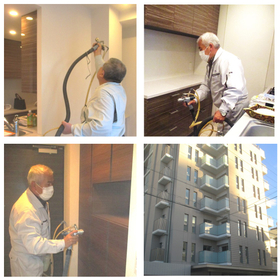
This is an example of photocatalytic treatment in a condominium interior (deodorization, antibacterial, and mold prevention).

The photocatalytic oxidation power decomposes and suppresses/reduces the substances causing indoor odors, bacteria, viruses, and mold, creating a clean environment.

■Titanium Dioxide Raw Material By coating a titanium dioxide aqueous solution, which serves as the raw material for photocatalysts, on the ceilings and walls of buildings, it exhibits effects such as dirt resistance, deodorization, antibacterial properties, antiviral properties, and mold prevention. ■Indoor Photocatalyst When light hits the surface of the indoor photocatalyst, reactive oxygen species are generated on the surface, decomposing organic substances that cause dirt and odors into harmless water and carbon dioxide. ■Outdoor Photocatalyst When rain hits the surface of the outdoor photocatalyst, a hydrophilic effect causes water to spread thinly beneath the dirt, contributing to self-cleaning as the dirt flows away with the water, thus maintaining the aesthetic of the building and reducing cleaning costs. ■Duration of Photocatalytic Effect Since titanium dioxide, the raw material for photocatalysts, is inorganic, it does not degrade due to ultraviolet light or other factors, and the effect continues for a long time as long as the coating substrate's paint surface or wallpaper does not peel off.

  • Photocatalysts and various wall materials (exterior and interior walls, etc.)
  • Architectural photocatalytic coating

Added to bookmarks

Bookmarks list

Bookmark has been removed

Bookmarks list

You can't add any more bookmarks

By registering as a member, you can increase the number of bookmarks you can save and organize them with labels.

Free membership registration